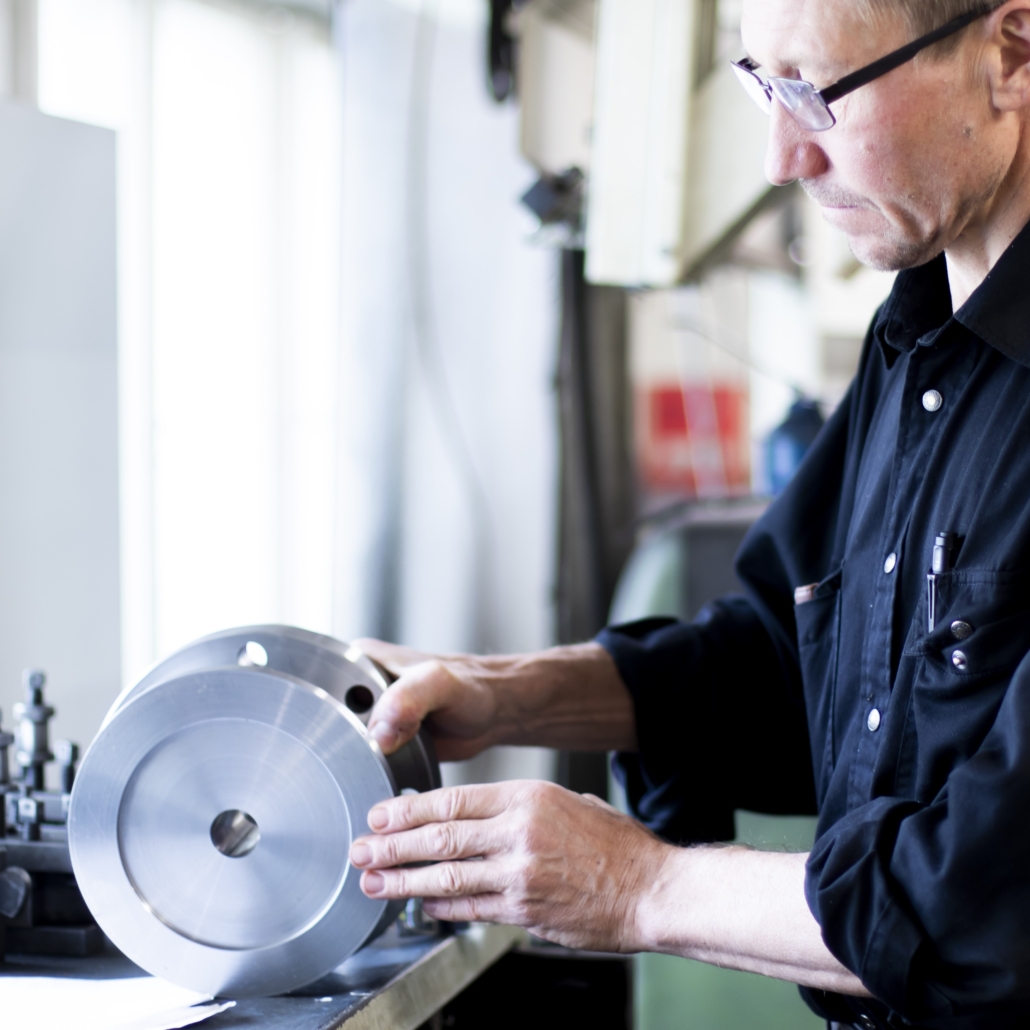
When procurement teams evaluate a plastic tube supplier, certifications often serve as the first filter. ISO 9001 and ISO 14001 are not decorative badges. They represent documented, audited management systems that directly affect product consistency, environmental performance, and supply chain reliability. For industrial buyers sourcing custom hoses, tubes, or profiles, understanding what these certifications actually require of a manufacturer can mean the difference between a dependable partnership and a costly supplier failure. This article explains what each standard signals, how to verify a supplier’s certification, and why dual certification matters in tube manufacturing. If you are already looking for certified plastic tubes, explore our tube product range for a practical starting point.
How Certified Quality Systems Reduce Supply Chain Risk
A certified quality management system gives industrial buyers documented evidence that a supplier controls its processes, tracks nonconformities, and continuously improves. ISO 9001 is the world’s most widely adopted quality management standard, with over a million certifications issued across more than 170 countries. For buyers, that widespread adoption creates a common language for evaluating suppliers regardless of geography or industry segment.
The practical value of ISO 9001 in tube manufacturing comes down to traceability and process control. The standard requires documented procedures for every production stage, from incoming raw material inspection through extrusion, cooling, cutting, and final quality checks. It mandates scheduled internal audits and corrective action systems that catch defects before they reach the customer. For procurement managers, this translates into faster supplier prequalification, fewer incoming inspection requirements, and a lower probability of shipment failures.
Risk reduction is not theoretical. Certified manufacturers maintain auditable records and management reviews that provide tangible evidence of process stability. When a buyer needs to justify supplier selection to internal quality teams or end customers, an ISO 9001 certificate backed by a reputable accreditation body carries real weight. It signals that the manufacturer has invested in preventing problems rather than reacting to them.
From a supply chain perspective, the standard also addresses externally provided processes and products. If a tube manufacturer sources raw polymers, masterbatches, or packaging from sub-suppliers, ISO 9001 requires controls over those inputs. This cascading accountability gives buyers greater confidence that quality is managed end to end, not just at the final assembly point.
What ISO 14001 Signals Beyond Environmental Compliance
ISO 14001 certification tells buyers far more than “this company recycles.” It signals a structured environmental management system that identifies, monitors, and reduces the environmental impact of manufacturing operations. More than 670,000 organizations worldwide hold this certification, and the recently published ISO 14001:2026 revision raises the bar further with stronger requirements around climate change, biodiversity, and supply chain accountability.
For tube and profile extrusion, ISO 14001 drives measurable operational improvements. The standard requires manufacturers to track energy consumption, waste streams, emissions, and chemical usage systematically. Organizations that implement it typically achieve significant reductions in waste disposal costs through improved segregation, reduced contamination, and better recycling practices. In extrusion specifically, this means tighter control over polymer scrap, off-spec production, and energy use in heating and cooling systems.
The 2026 revision introduces higher requirements for managing upstream and downstream environmental impacts across the value chain. This means certified tube manufacturers must now document and manage the environmental performance of their raw material suppliers and consider the end-of-life impact of their products. For industrial buyers facing their own ESG reporting obligations, working with an ISO 14001-certified supplier simplifies data collection and strengthens sustainability claims.
Operational Benefits That Go Beyond Compliance
Environmental management systems also improve operational efficiency in ways that benefit product quality. Reduced scrap means more consistent material usage. Controlled energy consumption means more stable extrusion temperatures. Better chemical management means fewer contamination risks. These operational disciplines overlap directly with quality management, which is why many manufacturers pursue both certifications together.
For buyers in regulated industries such as energy, medical devices, or marine equipment, ISO 14001 also provides documentation that supports compliance with REACH, RoHS, and sector-specific environmental regulations. A certified manufacturer can typically provide CO₂ footprint data, material traceability records, and waste management documentation that non-certified suppliers cannot.
Key Audit Criteria Buyers Should Verify in a Certified Supplier
Not all ISO certificates carry equal weight. Industrial buyers should verify specific details before accepting a supplier’s certification at face value. A valid certificate includes a unique registration number, the name of the certification body, the accreditation body’s mark, a defined scope of operations and sites covered, and an expiration date (typically three years from issue).
What to Check on the Certificate
The scope statement is particularly important in tube manufacturing. An ISO 9001 certificate should explicitly cover the manufacturing processes relevant to the buyer’s order. A company certified for “distribution of plastic products” is not the same as one certified for “manufacture of thermoplastic extruded tubing and profiles.” Buyers should read the scope carefully and confirm it matches the supplier’s claimed capabilities.
Certification validity can be verified through the Global Accreditation Cooperation’s CertSearch database, which provides three-way verification across certification and accreditation bodies. This tool allows buyers to confirm that a certificate is current, check whether it has been suspended or withdrawn, and set up alerts for status changes. For supply chain managers monitoring multiple suppliers, this real-time verification capability is invaluable.
Beyond the Certificate: What to Ask During Supplier Evaluation
A certificate confirms system compliance at the time of audit. To assess ongoing performance, buyers should also verify:
- Surveillance audit records: Annual surveillance audits are required between recertification cycles. Ask for evidence that these have been completed without major nonconformities.
- Corrective action process: How does the manufacturer handle nonconforming products? Request examples of corrective actions taken in the past year.
- Traceability systems: Can the supplier trace raw materials from incoming batch to finished product? This is essential for regulated applications.
- Statistical process control: Does the manufacturer use SPC or equivalent methods to monitor critical extrusion parameters such as wall thickness, diameter, and hardness?
- Management review outputs: Ask for a summary of recent management review findings. This reveals whether the quality system is actively driving improvement or simply maintaining paperwork.
These verification steps take time, but they separate genuinely committed manufacturers from those holding a certificate as a marketing tool.
Real-World Impact on Custom Tube and Profile Production
In custom tube and profile extrusion, the benefits of certified management systems become tangible at every production stage. ISO 9001’s process-based approach requires manufacturers to define, monitor, and improve each step from design input through final inspection. For custom products, where specifications vary from order to order, this discipline prevents the kind of errors that arise when processes depend on individual knowledge rather than documented systems.
Design and Prototyping
The design review requirements of ISO 9001 ensure that customer specifications are captured accurately before production begins. In tube manufacturing, this means verifying material selection, dimensional tolerances, color requirements, and any regulatory standards (such as EN ISO 5359 for medical applications or halogen-free requirements for energy sector components) at the design stage rather than discovering mismatches during production.
When a manufacturer maintains CAD design capability and in-house toolmaking under a certified quality system, every design change is documented, every prototype is traceable, and every tool modification follows an approved process. This structured approach reduces iteration cycles and gets custom products to production faster.
Production Consistency and Defect Reduction
Extrusion is a continuous process where small variations in temperature, line speed, or material feed can affect dimensional accuracy and mechanical properties. ISO 9001 requires manufacturers to identify critical process parameters and monitor them systematically. In practice, this means documented process settings for each product, regular calibration of measurement equipment, and defined acceptance criteria for every production run.
For buyers ordering custom tubes or profiles, this translates into consistent product quality across batches and over time. When a reorder arrives months after the initial run, the documented process parameters ensure it matches the original specifications. Without a certified quality system, that consistency depends entirely on operator memory and informal records.
Product Comparison: Certified Tube Products
The following comparison illustrates how certified quality systems support consistent production across different tube types and material combinations:
- ToppTube™ PA12P40: A flexible polyamide tube designed for pneumatic and fluid transfer applications. PA12 offers excellent chemical resistance and flexibility at low temperatures, making it suitable for demanding industrial environments.
- ToppTube™ PA11 (rigid): A rigid polyamide tube for applications requiring higher mechanical strength and dimensional stability. PA11 is a bio-based polyamide with strong resistance to stress cracking and fatigue.
- ToppMulti™ (PA12P40/HFFR): A co-extruded tube combining a PA12P40 inner layer with a halogen-free, flame-retardant (HFFR) outer layer. This product demonstrates how co-extrusion technology, managed under a certified quality system, combines different material properties in a single product to meet both functional and safety requirements.
Each of these products requires precise control over material properties, dimensional tolerances, and (in the case of co-extrusion) layer adhesion. A certified management system ensures that the process parameters, inspection criteria, and material traceability for each product type are documented, audited, and continuously improved.
Choosing a Tube Manufacturer With Dual Certification
Manufacturers that hold both ISO 9001 and ISO 14001 typically operate an integrated management system (IMS) that combines quality and environmental management into a single framework. Built on the shared Annex SL high-level structure, an IMS eliminates duplicated documentation, aligns quality and environmental objectives, and allows for unified internal audits. For buyers, this integration signals organizational maturity and operational efficiency.
When evaluating a dual-certified tube manufacturer, consider these factors:
- Scope alignment: Confirm that both certificates cover the specific manufacturing processes and product types relevant to your application.
- Integrated audit history: A manufacturer running a true IMS conducts combined audits. Ask whether quality and environmental audits are integrated or run separately.
- Material and process transparency: Dual certification means the manufacturer can provide both quality documentation (inspection reports, certificates of conformity) and environmental data (CO₂ footprint, material origin, waste metrics) for the same product.
- Continuous improvement evidence: Look for concrete examples of improvements driven by the management system, such as reduced scrap rates, lower energy consumption per unit, or shorter lead times.
- Transition readiness: Both ISO 9001 and ISO 14001 are being revised in 2026, with three-year transition periods. A forward-looking manufacturer will already be planning its transition to the new editions.
Dual certification is increasingly becoming a baseline expectation rather than a differentiator, particularly for manufacturers serving export markets or customers with ESG reporting requirements. Buyers who establish relationships with dual-certified suppliers now position their own supply chains for the tightening regulatory and reporting requirements ahead.
How Toppi’s ISO 9001 and ISO 14001 Certifications Benefit Your Supply Chain
Toppi Oy is a Finnish manufacturer of plastic hoses, tubes, profiles, and cables, founded in 1953 and operating from its production facility in Espoo. As a family-owned company since 1953 with over 70 years of extrusion expertise, Toppi holds both ISO 9001 and ISO 14001 certifications, running them as an integrated management system that covers the full design-to-production cycle.
Here is what that means in practice for industrial buyers:
- End-to-end quality control: Toppi manages CAD design, 3D prototyping, in-house toolmaking, and production under one roof and one certified system. Every step is documented and traceable.
- Environmental accountability you can measure: Production runs on 100% fossil-free electricity with guarantee of origin label. Toppi carries the Avainlippu symbol for Finnish-made products, giving buyers confidence in responsible, domestic manufacturing.
- Co-extrusion capability: Products like ToppMulti™ combine different materials and properties in a single tube, manufactured under controlled, audited processes that ensure consistent layer adhesion and dimensional accuracy.
- Custom manufacturing as standard: Most of Toppi’s production is custom work to customer specifications. The certified quality system ensures that custom orders receive the same rigorous process control as standard products.
- Proven track record: Toppi was named Subcontractor of the Year 2011 by the Finnish Association of Purchasing and Logistics (LOGY) and carries the Avainlippu symbol for Finnish-made products.
Whether you need standard polyamide tubes or a custom co-extruded profile for a specialized application, Toppi’s dual-certified system delivers the quality consistency and environmental documentation that industrial buyers require. Browse Toppi’s tube product range to see what is available, or contact Toppi’s team to discuss your specific requirements. Tell us your needs, and let us make it.